


Week 1: Exploration
Play is learning. Creativity is thinking.
Throughout April, we focus on how children learn through play, exploration, and creative experiences across all age groups.
In Kindergarten, students explored the world of animals, their habitats, behaviours, and groupings through stories, discussions, and hands-on experiences.
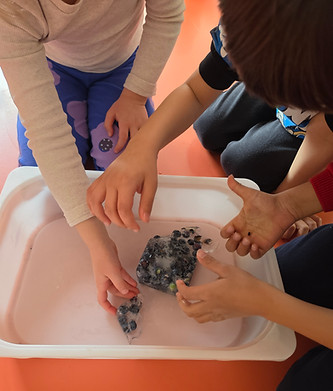

To deepen this understanding, the children explored what it might feel like for animals to have limited resources during winter by trying frozen blueberries. This simple activity encouraged them to reflect on effort, satisfaction, and survival in a meaningful way.
They also carried out a gummy bear experiment, observing how gummy bears change in water and salt water. Building on last month’s focus on Healthy Bodies & Calm Minds, this led to conversations about the importance of water for our bodies and how balance supports wellbeing.
These moments show how learning deepens when children can explore, question, and experience ideas for themselves.
On the last day before the Easter break, many classes came together for simple Easter activities. During an egg hunt, children explored their environment, collaborated, and solved small challenges together. The morning ended with a shared Easter brunch, creating a warm and joyful moment of connection across the school.
💡 Good to know
-
Children learn through play – they explore, try things out, and make sense of the world around them
-
Play supports creative thinking, problem-solving, and independent learning
-
Hands-on experiences help children develop deeper and more lasting understanding
At KIBS, play is a central part of learning.
Week 2: Book Week
This week, learning came to life through stories, imagination, and shared experiences during our Book Week.


Across the school, children engaged with literature in many different ways. Through activities such as tandem reading, older students from Grade 5 and 6 read to younger children, creating meaningful moments of connection and shared learning.


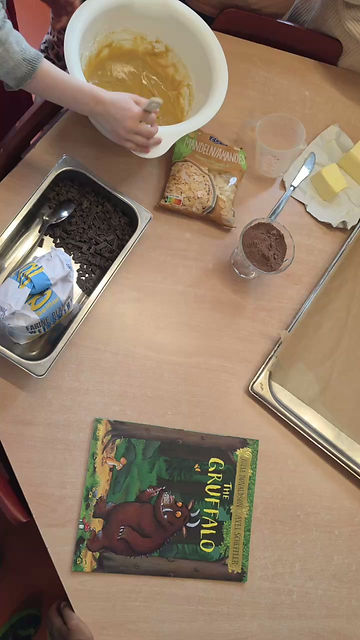
In Kindergarten and Grade 1, children experienced stories in a more sensory and creative way. From interactive storytelling at the Landesmuseum to baking Gruffalo paws, these activities brought stories to life and allowed children to engage with language through play and imagination.
Students also visited the Pestalozzi Library and explored a wide range of books, while the school bookshop and reading challenge further encouraged a love for reading across all age groups.


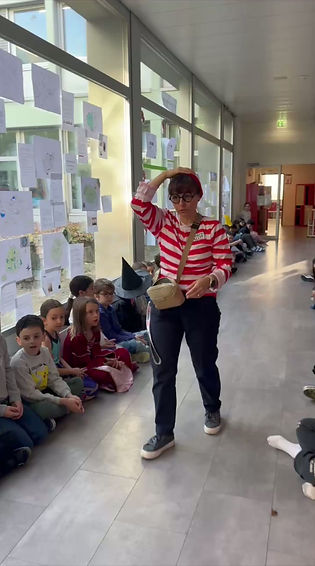
A special highlight was the Book Character Parade, where children came dressed as their favourite characters, celebrating stories in a joyful and creative way.
Alongside these student experiences, we also welcomed parents to our first Coffee & Curriculum event, where we shared insights into how children learn best and how we support this in our daily practice.


These moments show how learning becomes meaningful when children can experience stories, language, and ideas in active and creative ways.

💡 Good to know
-
Reading supports language development, imagination, and thinking
-
Shared reading experiences strengthen confidence and connection
-
Engaging with stories through play deepens understanding and enjoyment

Week 3: Experiments and Creativity
This week, leading into the spring break, our youngest learners explored the world through hands-on, sensory, and playful experiences.
For our Little Bees, simple sensory moments were at the centre of their learning. While experimenting with bicarbonate (baking soda) and vinegar, they observed the bubbling reaction with great curiosity. These moments invite wonder and help children begin to notice changes and understand that their actions can create new outcomes.
Bicarbonate & Vinegar Experiment Little Bees, 2–3 years old
They also explored early mathematical concepts in a playful way. While searching for and matching numbers in rice, children used their hands to explore, compare, and sort — a beautiful connection between sensory play and early numeracy.
Numbers in Rice
Little Bees, 2–3 years old)
In playful movement-based challenges, children developed body awareness, problem-solving skills, and confidence — all while experiencing joy and shared moments of success.
In Kindergarten, children experienced the full life cycle of butterflies — from observing larvae to watching them transform. A special highlight was releasing the butterflies into nature, creating a meaningful and memorable learning moment that connected them directly to the natural world.
At the same time, they also began preparing for their upcoming theatre performance in July. Through role play, movement, and storytelling, they explored characters and expression in a natural and engaging way.
In Primary, Assessment Week provided students with the opportunity to reflect on their learning and demonstrate their understanding in a structured and supportive environment.
This week shows how learning can take many forms — and how children grow through exploration, experimentation, and shared experiences.
Week 4: Hands-on learning
This week, learning continued through hands-on experiences, creativity, and exploration across all age groups.
In our youngest groups, children engaged in sensory and play-based activities that supported early development in a natural and joyful way. In the baby group, children created sensory bottles and explored water through playful activities such as catching fish, strengthening fine motor skills and coordination through movement and exploration.


Our Little Bees continued to explore early mathematical concepts through hands-on experiences. While searching for and matching numbers in rice, they explored, compared, and sorted using their hands, connecting sensory play with early numeracy.

In Kindergarten, children also took part in Project Week, focusing on the theme of spring. Through a variety of creative activities, they explored colours, materials, and seasonal changes, expressing their ideas in a playful and meaningful way.


In Primary, students took part in Project Week with a special focus on music. The entire project week took place outdoors, giving the children a chance to explore music in a natural environment. Through different activities and experiences, they explored music in a creative and engaging way, including a visit to the Opera House.


This week once again highlights how learning takes place through doing, creating, and experiencing — allowing children to explore ideas in ways that are meaningful to them.