


January at KIBS - Bilingual Beginnings
Week 1: Getting Started
At KIBS, we don’t teach languages — we live them.
Children grow into two languages in a wonderfully natural way, much like they learn to walk, laugh, and form friendships: through closeness, repetition, and joy.
At KIBS, bilingualism isn’t something children “do” only in a lesson — it’s part of who we are and how we live our days together. Our teachers each speak one language consistently — English or German — and children quickly learn which language belongs to which person, just as they do at home when different caregivers speak different languages. Before long, they move between both languages with ease and confidence — and without pressure.


In the early years, it is completely normal for one language to feel stronger for a while. That balance shifts gently over time as children listen, try, repeat, and grow — each in their own rhythm.
With steady exposure and warm relationships, children become increasingly secure in both school languages. By Grade 6, most of our students communicate confidently in German and English. And when a third language is part of home life, that is not a complication — it is an added gift. It simply means every child’s language journey looks a little different, and we are here to support each one on their own multilingual path.

Language blossoms where children feel safe and connected — in play, stories, songs, routines, and all those small, real moments of everyday life. This month, we invite you into exactly those moments — from our Baby Room all the way to Grade 6.
Welcome to our Bilingual Beginnings.
💡 Good to know 💡
Research in bilingual child development — including findings from Cambridge University — shows that it is very common for young children to lean more on one language at first. Over time, with regular contact and secure relationships, both languages grow stronger and more balanced.
At home, one of the most helpful gifts you can give is to speak with your child in the language that feels closest to your heart and comes most naturally to you. When families stay as consistent as possible, children are supported in building both languages step by step, with confidence and ease.
Week 2: Learning in Action
Mrs Novak’s glimpse into everyday life at KIBS
What we’re looking at this week: the small steps — how children plan, coordinate, explain, and support one another.
Today, I’d like to take you right into learning at KIBS. For us, “Learning in Action” isn’t about perfect results — it lives in the small moments we notice, support, and celebrate every day.
Baby Room

In our Baby Room, learning often begins quietly and gently: a child presses and shapes soft dough again and again, watches closely, smiles — and tries once more. In these moments, focus grows, connection deepens, and tiny hands discover what they can do.
Kindergarten

In Kindergarten, learning comes alive in our role-play room. Children step into their own worlds — today it’s a restaurant, tomorrow a hospital, sometimes both at once. They take orders, ask questions, “cook,” serve, and keep the story going together — learning with imagination, language, and real everyday meaning.
Primary
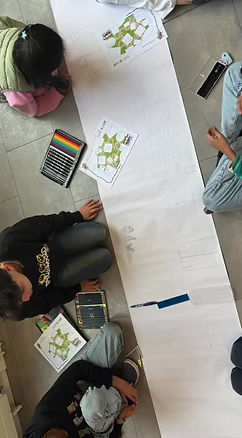
In Grade 2, children work in small groups during a maths workshop: they use materials, sketch ideas, compare strategies, and explain their thinking aloud.
During English time, you might hear: “Let’s try it this way — can you show me your thinking?”
And during German time: „Zeig mir mal deinen Lösungsweg — warum funktioniert das?“
Clear language spaces help students express themselves with confidence, while learning and language grow side by side through questioning and explaining.
I look forward to sharing more of these real learning moments with you— just as we experience them every day at KIBS.


Week 3: Supporting Growth
At KIBS, bilingualism develops over time — through familiar routines, clear language spaces, and trusting relationships. With steady exposure, children feel increasingly secure in both German and English, each in their own rhythm.
This week, we’re sharing two snapshots of that journey: our Little Stars (ages 3–4) and a glimpse into Grade 5.


In Little Stars, the day has a calm and predictable rhythm: mornings are in German, and the afternoon continues with our English-speaking team. Language grows in small, meaningful moments — in greetings, play, songs, snack-time conversations, and everyday routines. At the same time, children begin to explore early learning too: they count, compare, notice letters, and start linking language and thinking. This often happens naturally — playfully, in short learning moments, and always held within a warm relationship.

In Grade 5, language growth looks different. In the morning, students work in English — reading, discussing, and developing ideas together. In the afternoon, they return to similar content in German, choosing more precise words, structuring arguments, and carrying their thinking forward. It is always special to see how naturally they build on one another’s ideas — and how connected their learning remains across both languages.


Supporting growth means staying close to these moments — and watching how language and learning develop side by side over the years.

Week 4: Voices & Reflection
As January comes to a close, we’re sharing a few voices from our community — small reflections that capture everyday life at KIBS.
Children, teachers, and parents share what learning, language, and belonging feel like in the moments that matter most.
Some words are spoken, others are felt — in confidence growing, routines settling, and relationships deepening.
Together, these voices remind us that learning at KIBS is built on connection, care, and shared experience.
Voices of Students and Teachers

Some Parents ask us: "Why does English come faster than German?"
-Our Primary Principal, Ms. Sutherland

Parent of a Kindergarten child-
“We noticed that she naturally switches between German and English when she sings, when she plays, when she talks with friends or telling stories. We’ve noticed this when she is exposed to German speaking and also English speaking children. She easily adapts and switches languages based on the person that she’s talking to.”
A G2 Parent explaining where he sees language come alive in his child's day